


To remove a stain from a bed sheet, act quickly, blot it instead of rubbing, and rinse it from the back with cold water. Then treat it according to what caused it, wash it, and check that it’s completely gone before the sheet dries. Hot water and heat set most stains permanently, so keep both away until the mark is out.
That’s the method in short. Below is exactly what to do for the stains Pakistani homes deal with most: chai, haldi, mehndi, hair oil, blood, ink and baby accidents.
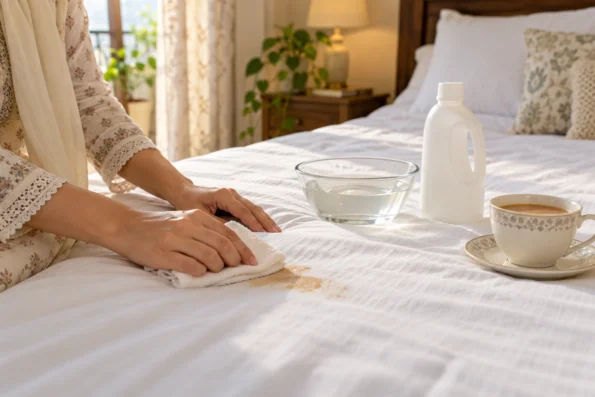
Three rules that save almost any stain
Follow these three rules and most stains come out on the first try.
- Blot, don’t rub: Press a clean white cloth or tissue onto the stain to lift what you can. Rubbing pushes it deeper into the weave and spreads it wider. Always work from the outside edge inward.
- Start with cold water, from the back: Hold the stained area under a cold tap with the wrong side facing the water. This pushes the stain back out the way it came in, instead of through the whole sheet. Hot water cooks many stains into the fibres.
- Check before it dries: Never hang or iron a sheet until the stain is fully gone. Drying, especially in strong sun or with an iron, can fix a half-removed stain for good.
Know your stain before you treat it
Different stains need different treatment, and using the wrong one can make things worse. Most bed sheet stains fall into four groups:
- Protein stains: blood, milk, baby spit-up, urine. Heat makes the protein set, so use cold water only.
- Tannin stains: chai, coffee, fruit juice. Rinse quickly and avoid bar soap, which can lock tannin stains in.
- Oil stains: hair oil, body cream, ghee, achar oil. Need a grease-cutting soap such as dishwashing liquid.
- Dye stains: haldi, mehndi, ink, kajal. The colour bonds strongly to cotton and needs patience, and sometimes sunlight or hydrogen peroxide.
Some stains belong to two groups at once, which is why doodh patti chai is trickier than plain tea.
How to remove chai stains
Act within minutes if you can. Doodh patti has both milk (a protein) and tea (a tannin), so treat it for both.
- Blot up as much as you can straight away.
- Rinse from the back under cold water. Never hot water, which sets the milk.
- Rub a little liquid detergent into the mark with your fingers and leave it for 10 to 15 minutes.
- Rinse again in cold water and check. If a light brown shadow remains, soak the area for 30 minutes in cold water with a spoon of oxygen bleach (white sheets) or detergent (coloured sheets).
- Wash normally once the mark is gone.
Avoid rubbing bar soap or laundry soap cakes on a fresh chai stain. Soap can react with the tannins and make the brown mark harder to shift.
How to remove haldi and curry stains
Haldi is one of the hardest stains to remove, because its yellow pigment, curcumin, clings tightly to cotton. In parts of South Asia turmeric has long been used as a fabric dye for exactly that reason. The good news is that sunlight breaks curcumin down.
- Scrape off any curry with a spoon. Don’t wipe, which smears the oil and colour wider.
- Rinse from the back with cold water. Hot water binds the pigment more tightly.
- Work a few drops of dishwashing liquid into the stain to cut the oil from the curry, then rinse.
- Rub in liquid detergent and wash as normal.
- Hang the sheet damp, stain facing the sun. Direct sunlight fades haldi steadily. Most marks disappear in one or two sunny days. Re-wet the spot if it dries before the stain is gone.
On white cotton, a little 3 percent hydrogen peroxide (sold at most medical stores) dabbed on after washing can lift the last yellow traces. Don’t use it on coloured or printed sheets without testing first.
How to remove mehndi stains
Mehndi accidents are common in wedding season, when hands with fresh designs rest on a guest bed overnight. Henna’s colouring compound binds to cotton and darkens as it oxidises, so the first hour matters most.
- Scrape off any wet or dried paste with a blunt knife. Don’t wet it while paste is still on the sheet, because that releases more dye.
- Rinse from the back with cold water.
- Rub liquid detergent into the stain and leave it for 15 to 20 minutes, then rinse.
- On white cotton, dab 3 percent hydrogen peroxide or soak in oxygen bleach solution for an hour, then wash.
- On coloured sheets, repeat the detergent soak two or three times rather than using peroxide.
Be realistic: a mehndi stain that’s already turned dark brown may fade a great deal but rarely disappears completely. Next time, keep an old sheet or towel over the bed while mehndi is drying.
How to remove hair oil and body oil spots
Coconut, mustard and almond hair oil leave darker, greasy patches on pillow covers. Oil doesn’t mix with water, so a cold rinse alone won’t move it.
- Sprinkle baking soda or corn flour on the fresh spot and leave it for 20 to 30 minutes to soak up the oil. Brush it off.
- Rub a few drops of dishwashing liquid into the stain. Dish soap is made to cut grease.
- Leave it for 10 minutes, then wash in the warmest water the label allows. Oil, unlike blood, comes out better with warmth.
If you oil your hair overnight, switching the pillow cover more often stops oil building up in the pillow inside. Our guide to how often to change your bed sheets explains how often. Old, widespread yellowing from oil and sweat is a different problem, covered in why bed sheets turn yellow.
How to remove blood stains
Use cold water only. Blood is a protein, and warm or hot water makes it set into the cloth.
- Blot fresh blood, then rinse from the back under a cold tap until the water runs clear.
- Rub a paste of salt and cold water into the stain, or a little liquid detergent, and leave it for 15 minutes.
- Rinse in cold water and check.
- For stubborn marks on white cotton, dab on 3 percent hydrogen peroxide. It will fizz as it lifts the blood. Rinse well afterwards.
- Wash in cold or lukewarm water, never hot.
How to remove ink and kajal marks
Pen ink from homework done in bed, and kajal or surma on pillow covers, are dye and oil stains combined.
- Ink: Put a folded tissue under the stain. Dab the mark with hand sanitiser or rubbing alcohol on a cotton pad, moving to a clean part of the pad each time so you don’t spread the ink. Keep going until no more ink transfers, then rinse and wash.
- Kajal and surma: Dab with dishwashing liquid or a little makeup remover, leave for 10 minutes, then rinse in warm water and wash.
Test alcohol on a hidden corner of printed sheets first, because it can lift some dyes.
How to clean baby spit-up and accidents
Spit-up, milk and urine are protein-based, so the cold-water rule applies again.
- Remove the sheet straight away and rinse the area from the back in cold water.
- Soak for 30 minutes in cold water with a little detergent.
- Wash on the hottest cycle the fabric allows once the stain is gone, to clean it properly.
If liquid has soaked through to the mattress, the sheet is the easy part. A waterproof mattress protector under the sheet stops it reaching the mattress at all, and goes straight in the wash instead.
How to remove old or dried stains
A stain that has already been washed and dried is harder, but not always permanent.
- Re-wet the area with cold water and let it sit for a few minutes.
- Treat it with the method for that stain type, but leave the product on longer, 30 to 60 minutes.
- For white cotton, a long soak (a few hours or overnight) in cold water with oxygen bleach often lifts old stains that nothing else touches.
- Repeat once or twice before giving up. Each round usually lightens it further.
If a stain has been ironed or dried in hot sun several times, it may be fixed for good.
Whites versus coloured and printed sheets
What’s safe on a white sheet can ruin a coloured one.
- White cotton: hydrogen peroxide, oxygen bleach and strong sunlight are all safe and effective for stubborn marks.
- Coloured and printed sheets: stick to cold water, detergent and dish soap. Test anything stronger on a hidden corner or hem first. Dry in the shade so the print doesn’t fade. Our guide to why bedsheet colour runs explains why dyes react.
- Velvet: blot only, using cold water and a little detergent. Never scrub the pile, or it will flatten permanently.
Avoid chlorine bleach on stained bed sheets in general. It weakens cotton, can strip colour from prints, and can make organic stains like sweat or chai turn darker rather than lighter.
Mistakes that make stains permanent
These habits turn a stain you could have removed into one you can’t:
- Rinsing with hot water before the stain is out.
- Rubbing hard with a brush or cloth.
- Rubbing bar soap into a fresh chai or coffee stain.
- Ironing over a stain, or drying it in strong sun before checking (haldi is the one exception).
- Mixing cleaning products, especially bleach with vinegar or bleach with ammonia, which gives off harmful fumes.
- Leaving the sheet balled up in a laundry basket for days before treating it.
Prevent stains before they happen
The easiest stain to remove is the one that never reaches the sheet.
- Use a mattress protector. It catches spills and accidents, and helps the mattress last longer.
- Keep an old pillow cover for hair-oil nights, and put the good one back the next morning.
- Keep chai and food off the bed, especially with children around.
- Use printed or darker sheets in children’s rooms, where marks are more likely and easier to hide.
- Keep white sheets for adults’ rooms and guests. Our white hotel sheets are pure cotton, which handles peroxide and sunlight well when a stain does happen.
If a sheet arrives from us with a mark or fault in the cloth, you don’t need any of these methods. Our 7-day replacement covers it, and you can reach us on WhatsApp at 0324 492 4274.
Frequently asked questions
Does sunlight really remove haldi stains?
Yes. Sunlight breaks down curcumin, the yellow pigment in haldi. Wash the sheet, then hang it damp with the stain facing direct sun. Most haldi marks fade completely in one or two sunny days.
Can a mehndi stain be removed from a bed sheet?
Often, if you act within the first hour. Scrape off the paste, rinse from the back in cold water, and soak in liquid detergent. On white cotton, hydrogen peroxide or oxygen bleach helps. A mehndi stain that has already darkened may fade but rarely disappears completely.
Should I use hot or cold water on stains?
Cold water first for almost every stain, especially blood, milk, chai and haldi, because heat sets them. Oil stains are the exception: once pre-treated with dish soap, they wash out better in warm water.
Is bleach safe for removing stains from bed sheets?
Avoid chlorine bleach. It weakens cotton, strips colour from prints, and can make organic stains like sweat or chai darker. Oxygen bleach is a safer choice for white cotton.
Can old stains be removed after washing?
Sometimes. Re-wet the stain, treat it again with the right method, and leave the product on longer. A long soak in oxygen bleach often lifts old marks on white cotton. Stains that have been ironed or sun-dried several times may be permanent.
How do I remove a chai stain from a white bed sheet?
Blot it, rinse from the back in cold water, rub in liquid detergent and leave it for 15 minutes. If a shadow remains, soak the area in cold water with oxygen bleach for 30 minutes, then wash. Avoid bar soap on fresh chai.
What removes hair oil from pillow covers?
Sprinkle baking soda or corn flour on the spot to soak up oil, then rub in dishwashing liquid and wash in warm water. Dish soap is designed to cut grease, which plain detergent struggles with.
What is the best home stain remover for bed sheets?
There’s no single best one, because each stain type needs something different. Keep four things at home: liquid detergent, dishwashing liquid, 3 percent hydrogen peroxide for whites, and oxygen bleach. Together they handle almost every bed sheet stain.